Real-World Impact of 4C Learning
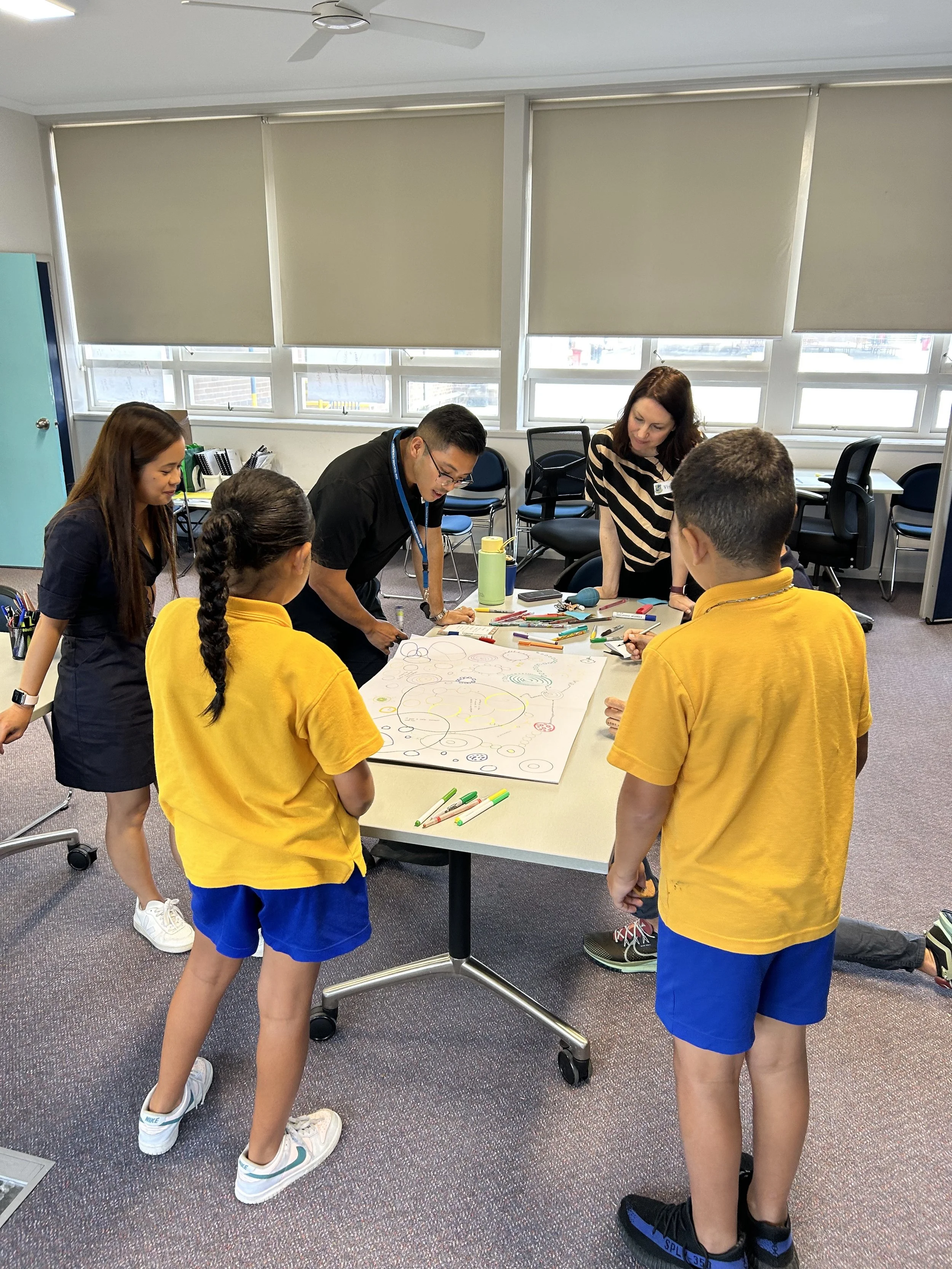
Across Australia and internationally, schools adopting the 4Cs are seeing meaningful changes.
Students become:
More engaged in their learning
More confident in expressing ideas
Better at working with others
More capable of thinking independently
Teachers report:
Greater professional satisfaction
Deeper connections with students
More innovative teaching practices
And schools evolve into learning communities rather than just instructional sites.
The work of Anderson and Jefferson, particularly through initiatives like 4C Transformative Learning, has already influenced over 80 schools and organisations, in all education sectors, from pre-K to adul education, demonstrating that this approach is not just theoretical—it is practical and scalable (4CTL).
The Future of Education: Beyond the 4Cs?
While the 4Cs provide a powerful foundation, they are not an endpoint. Instead, they act as a framework for ongoing evolution.
As education continues to change, new questions emerge:
How do we integrate digital and AI literacy with the 4Cs?
How can assessment systems better capture complex capabilities?
What does equity look like in a 4C school?
The strength of the 4Cs framework is that it is adaptable. It does not prescribe a single model but provides guiding principles that can evolve with context.