The Learning Disposition Wheel: A New Lens for Transformative Learning
In today’s rapidly evolving educational landscape, the question is no longer just what students should learn, but how they learn—and more importantly, who they become as learners.
This shift has brought increasing attention to learning dispositions, a concept that sits at the heart of meaningful, future-focused education.
Drawing on the work of Professor Michael Anderson and Dr Miranda Jefferson, the learning disposition wheel offers a powerful framework for understanding and developing the attitudes, habits, and mindsets that underpin deep, lifelong learning. Closely aligned with their broader vision of transformative learning, this model provides educators with a practical and holistic way to cultivate capable, adaptive learners.
What Is the Learning Disposition Wheel?
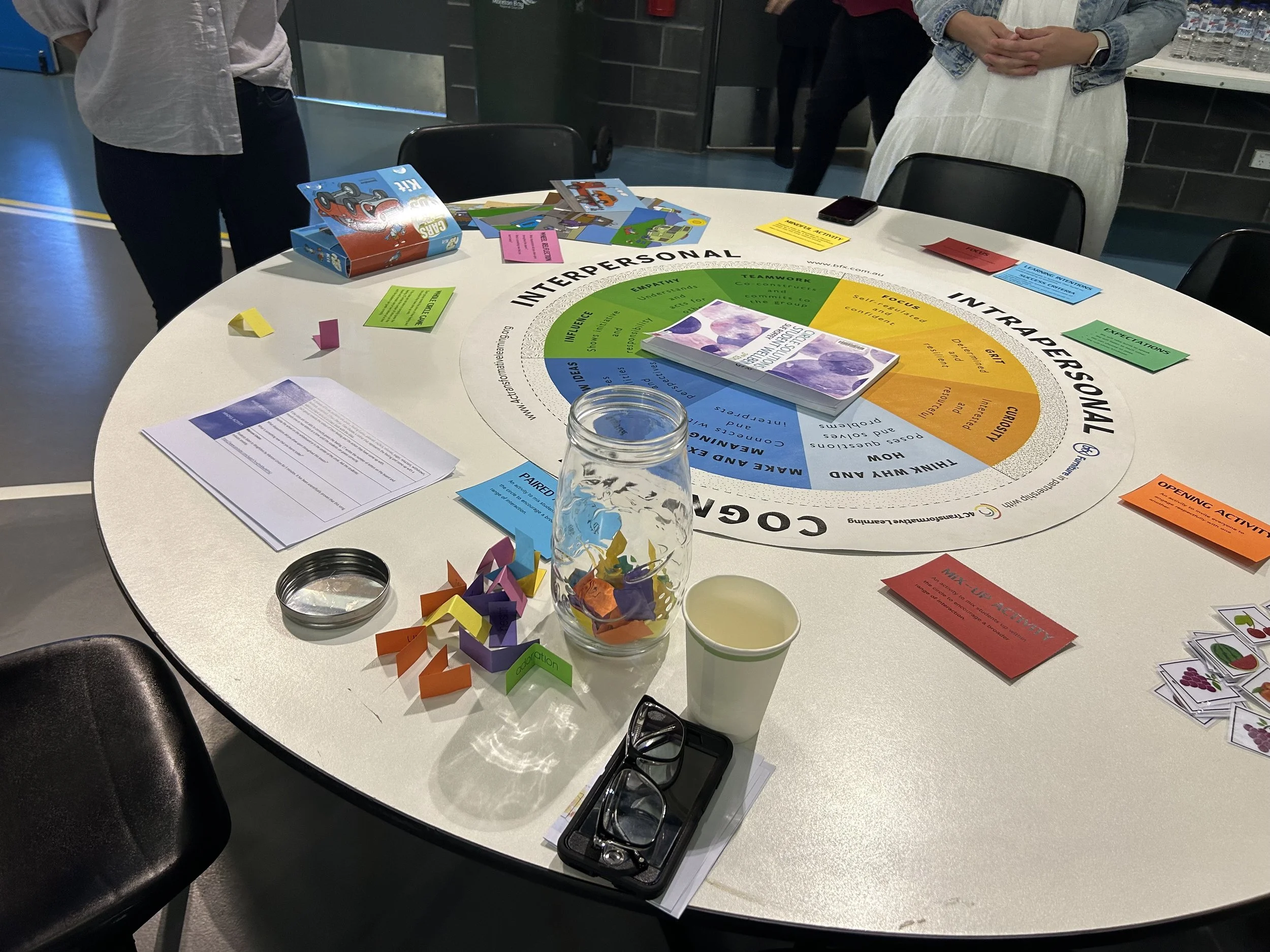
The learning disposition wheel (the wheel) is a conceptual model that maps the key learner dispositions needed to thrive in complex, uncertain environments. Rather than focusing solely on knowledge or skills, the wheel emphasises the ways of being that shape how learners engage with challenges, opportunities, and growth.
At its core, the wheel represents a set of nine interconnected learning dispositions—patterns of thinking, feeling, and acting that influence how students approach learning.
These may include dispositions such as:
Grit
Focus
Curiosity
Teamwork
Empathy
Influence
Think why and how
Make and express meaning
Build new idea
What makes the learning disposition wheel particularly powerful is its dynamic and interconnected structure. Each disposition is not isolated; instead, they interact and reinforce one another, creating a holistic picture of the learner.
For example, a student’s curiosity may drive exploration, but it is their grit and focus that sustains effort when learning becomes challenging. Similarly, teamwork can deepen understanding, while thinking why and how allows learners to refine their thinking.
From Skills to Dispositions: A Critical Shift
Traditional education systems have often prioritised measurable outcomes—test scores, content mastery, and discrete skills. While these remain important, Anderson and Jefferson argue that they are insufficient for preparing students for the demands of the modern world.
This is where learner dispositions come in.
Unlike skills, which can be taught and assessed in isolation, learning dispositions are:
Developed over time
Context-dependent
Deeply personal and relational
They influence not just what students learn, but how they learn—and whether they continue learning beyond the classroom.
This shift aligns closely with the principles of transformative learning, which emphasise deep, meaningful change in how individuals think, act, and understand themselves as learners.